
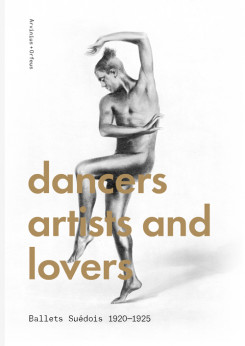
Dancers, Artists, Lovers - Ballets Suedois 1920-1925
Erik Mattsson Eva-Sofi Ernstell
Arvinius + Orfeus Publishing, ISBN 9789187543814,
Hb, 352 pgs, 16 x 22cm
Acqn. 30998
Awaiting stock - please contact orders@artdata.co.uk to make preorders
£38.50
Hb, 352 pgs, 16 x 22cm
Acqn. 30998
Awaiting stock - please contact orders@artdata.co.uk to make preorders
£38.50
"I envy the painters. Their art is eternal. The work carries its own life within, independent of its creator. A dance lives rather short. As short as the dancer himself."
- Jean Borlin
In the post-war 1920s, new ideas were blossoming and a creative experimental appetite was awakening. A new avant-garde took form. At its epicentre was an unconventional dance troupe with a politically charged repertoire that did not hesitate to provoke its audience: they went by the name Ballets Suedois. The eccentric couple Rolf de Mare and Jean Borlin were its leaders, but the co-creators were many.
Ballets Suedois was not an ordinary dance company, their creations were more than plain choreography, they were total artworks. Aside from the young dancers in the company, they had collaborations with artists such as Nils Dardel, Francis Picabia and Fernand Leger, and
composers like Erik Satie, Hugo Alven and Darius Milhaud, to name but a few.
With multi-media works such as Les Maries de la Tour Eiffel (The Wedding on the Eiffel Tower), Iberia, and L'Homme et son desir (Man and his Desire), where the music, stage decor, choreography, costumes, performance, and at times even the audience, were part of the creation, they took over stages around Europe and the USA between 1920 and 1925.
Through historical views on the male body. Through the adventures of the female dancers. Through love, friendship, conflict and tragedy. Through financial troubles and the fierce competition with Ballets Russes. Through Paris, Stockholm and Copenhagen. Through experimental musical compositions and their influence on composers such
as John Cage. Through the innovative and extravagant haute-couture costumes. Through the legacy they left behind for new generations of dancers and through a re-enactment of their Dadaistic piece Relache. Ballets Suedois were ahead of their times in many regards. Ballets Suedois were queer long before it was a notion in gender and LBTQ
research. Ballets Suedois created performance art long before the Fluxus movement introduced it to the art world in the 1960s. This book highlights their importance for modernism as well as following generations of artists, composers, choreographers, dancers, fashion designers and scholars.
Borlin's wish came true: Ballets Suedois lives on, it is eternal.