
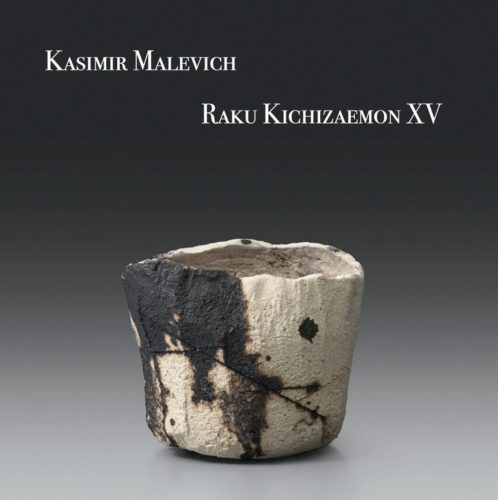
Kasimir Malevich, Raku Kichizaemon XV
Annely Juda Fine Art, ISBN 9781904621942,
Pb, 144 pgs, 21 x 26cm
Acqn. 32476
In Stock
£30.00
Pb, 144 pgs, 21 x 26cm
Acqn. 32476
In Stock
£30.00
Raku tea bowls are shaped by hand rather than being thrown on the potter's wheel and are drawn from the kiln at the height of the firing so that they cool rapidly in the atmosphere outside. Their purpose is for drinking whipped tea (matcha) in the tea ceremony (chanoyu). Typically either monochrome red or monochrome black, Raku tea bowls were considered radically avant-garde when they first appeared in the late sixteenth century. They were synonymous with the ideals of the wabi-style of tea ceremony pioneered by the renowned tea master Sen Rikyu (1522-91). The Raku family has lived and worked on the same plot of land in Kyoto since 1586.
Kasimir Malevich was an important avant-garde artist born in Kiev in 1879, famous as the pioneer of Suprematism and the championing of non-objectivity. His most representative works are his Black Square painting of 1915 and his White on White of 1918. These seminal modernist works had a major influence on the development of 20th century abstract art and minimalism.