
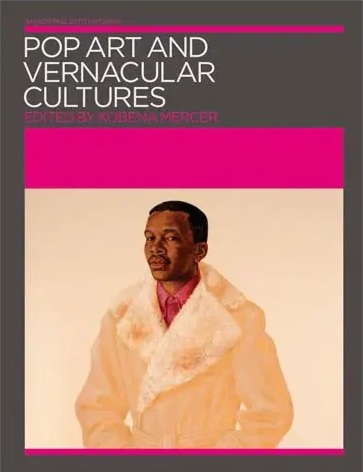
Annotating Art Histories - Pop Art and Vernacular Cultures
ed. Kobena Mercer
iniva, ISBN 9780262633505,
Pb, 232 pgs, 18 x 24cm
Acqn. 37843
In Stock
£25.00
Pb, 232 pgs, 18 x 24cm
Acqn. 37843
In Stock
£25.00
A cross-cultural perspective on the aesthetics and politics of pop art.
How does pop art translate across cultures? What does pop art look like through a postcolonial lens? In the global marketplace of images, artists have long challenged the discourse of officialdom by turning to dissident elements in the languages of vernacular culture. This volume casts new light on the aesthetics and politics of pop by taking a cross-cultural perspective on what happens when everyday objects are taken out of one context and repositioned in the language of art. Pop Art and Vernacular Cultures examines practices that range from the recycling of consumerist waste in Chicano rasquachismo to the painterly pastiche of Hindu photo-gods, exploring the semiotic transformations that arise when art reveals unexpected antagonisms in the social life of images. Showing how boundaries marking high and low are further corroded by strategies that question categories of folk, nation, and people in the global culture of modernity, this book breaks new ground in understanding pop art's ambiguous reaction to (and compliance with) the dynamics of high capitalism. When Mao goes pop, should we see the results as avant-garde, anti-modern, or postmodern? Who owns popular culture in South Africa or Brazil? Why is hybridity so closely associated with the carnivalesque and the grotesque? The critical revision proposed by this third volume in the Annotating Art's Histories series dramatically expands the world map of the period from which our definitions of contemporary art are drawn.
Annotating Art’s Histories series
Featuring internationally renowned scholars and curators at the critical edge of current research in art history, visual culture, and the humanities, Pop Art and Vernacular Cultures is the third volume in the Annotating Art’s Histories series. Newly-comissioned writings are presented alongside bibliographies, translations, and selected reprints of key texts. Building up a richer understanding of cultural difference as a dynamic feature of 20th-century art, this acclaimed series is essential reading for students, practitioners, and anyone curious about cross-cultural interaction in the visual arts.